The Greco-Persian Wars
Lo1: Define The Greco-Persian Wars
Lo2: Identify causes and outcomes of the Persian Wars.
Lo3: Create a timeline of important people, terms, and events relative to the wars.
_________________________________________________________________________________
Lo1: The Greco-Persian Wars were a series of conflicts between the Achaemenid Empire of Persia (modern day Iran) and Greek city-states that started in 499 BC and lasted until 499 BC. The fighting was most intense during two invasions that Persia launched against mainland Greece between 490 and 479.
Lo2: The Persian Wars against Greece were caused because the Darius, the Persian king, wanted to expand their empire. The wars took place in the early 5th century B.C. but the first attack was around 490 B.C. but the Persians lost. King Darius was humiliated and wanted to continue on which caused the series of wars.
Lo3: Peace of Callias 449 BC: Both Persia and Athens come to an agreement to end conflict. Persia gives back Ionian colonies to Greece, marks end of dispute of Greco-Persian Wars.

Persia Land Force and Sea Force Threat to Greece Eliminated 478 BC: Persia's main invasion force from the land and the sea is wiped out at the battles of Platea, Mycale, and Salamis. Persians, including Xerxes, have retreated back home to Persia while Persian general Mardonius stays and gets cut down by the Greeks.

Delian League 478 BC: League formed by Greek colonies for the protection, and to fight back against Persian resistance. Would later be a source of conflict between the Greek colonies after Athens would begin to act imperialistically.

Battle of Platea January 1, -047: The Battle of Plataea was the final battle during the second Persian invasion of Greece. Mardonius and the Persians face a large Greek land force, where the Greeks initially extend to far and order a retreat due to miscommunication with the lines, Mardonius foolishly orders an advance of Persian infantry, only for the Greeks to stop in their place and cut them down, ending the Second Invasion Force.

Battle of Mycale 479 BC: Greeks assemble a huge fleet and catch the resting Persians on the beach that were hoping to avoid a battle and slaughter them. This would be one of two battles that would end the Persian land invasion force.

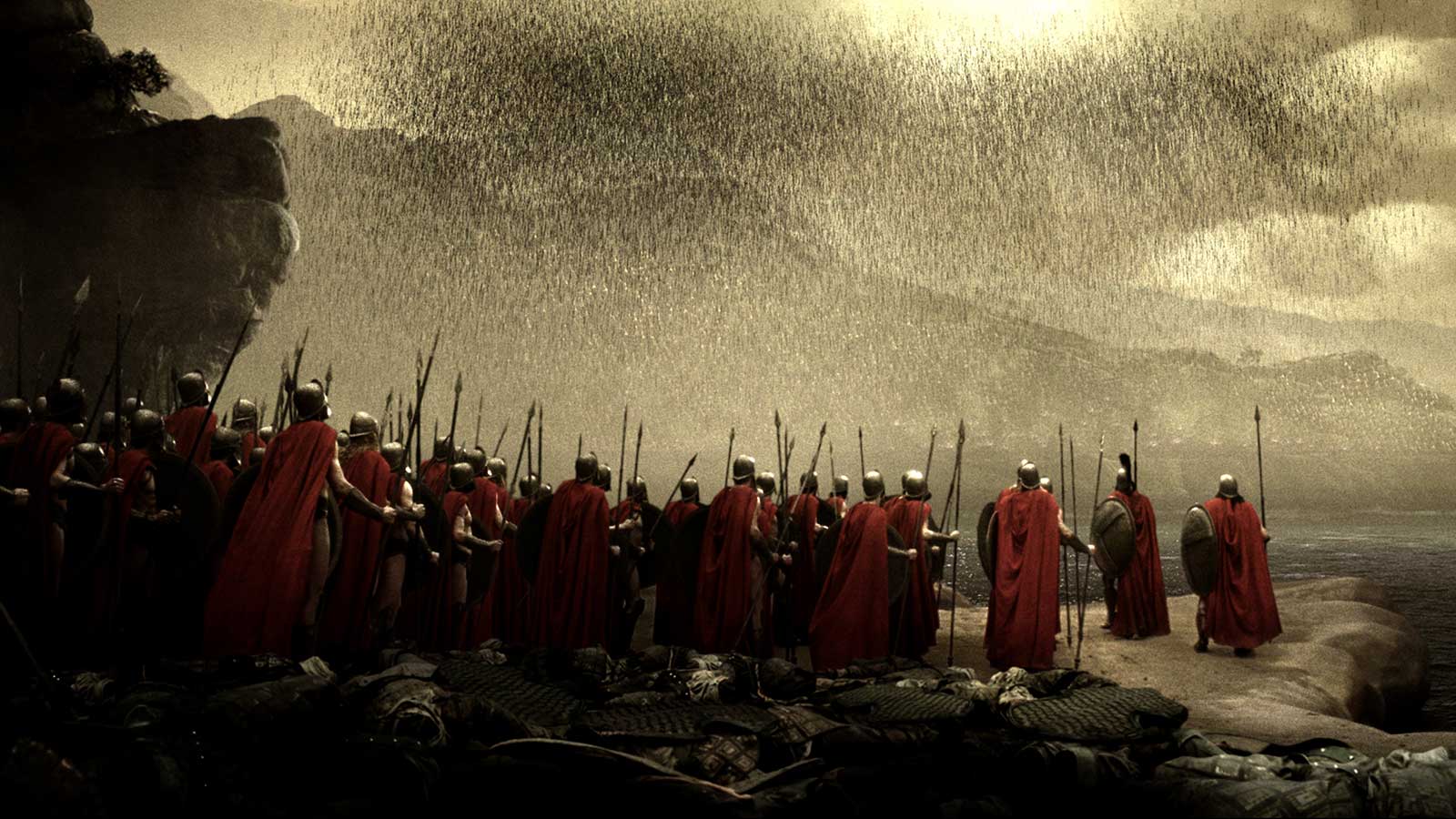
Battle of Thermopylae and Artemisium January 1, -0480: 300 Spartans and a force of Athenians take a stand at the "Hot Gates" to prevent Persia from entering Greece. 300 Spartans die heroically in defense of their country and value and take 20,000 Persians to the grave, huge moral boost for Sparta. At the same time the Greeks defeat the Persians at sea, demonstrating Athenian naval superiority. The 3 day fight is won, but the ships are forced to fall back because of the defeat at Thermoplyae. This would now lead to the Battle of Salamis.
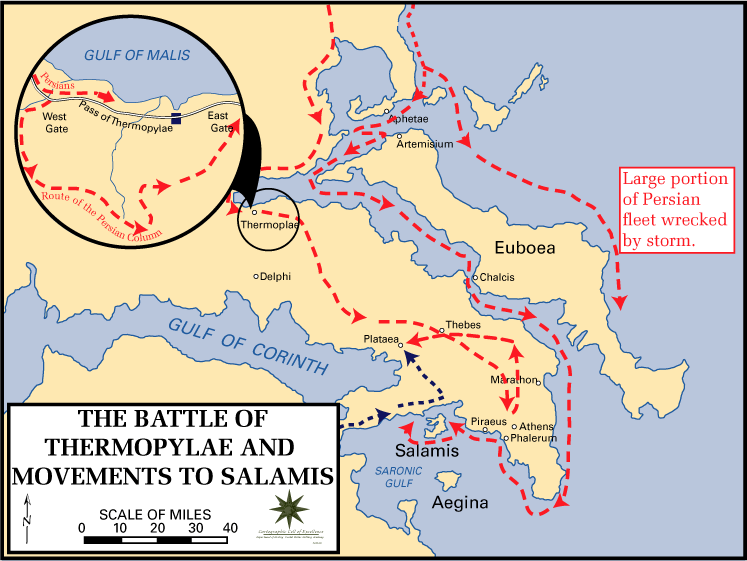
Battle of Salamis 480 BC: This battle was fought after the Greek retreat from Artemisium. The Greeks lured the Persians into the narrow straits of Salamis, where they then proceeded to ram the over sized Persian ships, with the small sturdy Greek triremes. This flaw in the Persian fleet was exploited by the brilliant Greek mind, Themistocles. Turning point in the war for the Greeks, Persian fleet was crippled after this battle.

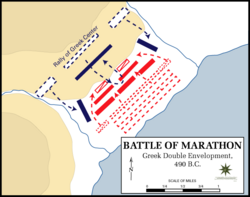
Battle of Marathon 490 BC: Inspired by the concept of Freedom and Democracy and outnumbered 3-1, Athenians hand Persia first ever defeat under the leadership of Miltiades on shore of Marathon. Much debate going into the battle whether to meet the Persians at the coast, or fight in Athens. This battle is seen as one of the most important moments in history, if the Greeks had lost, Western civilization would have never developed.
Invasion of Naxos, Official Start of War 429 BC: Mardonius leads an invasion force through Naxos, burns it to the ground. Marks first Persian invasion of Greece.
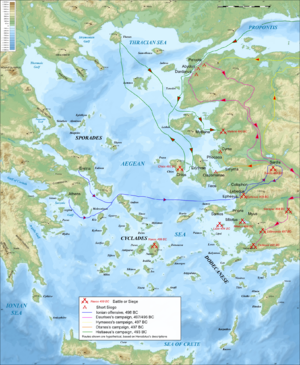
Start of Greco-Persian War 500 BC: Greek freedom fighters revolt against Persian tyrants, "accidentally" burn down a Persian temple. Darius is outraged, plans to strike back at all of Greece.

Works cited
https://www.preceden.com/timelines/339215-greco-persian-war
Lo2: Identify causes and outcomes of the Persian Wars.
Lo3: Create a timeline of important people, terms, and events relative to the wars.
_________________________________________________________________________________
Lo1: The Greco-Persian Wars were a series of conflicts between the Achaemenid Empire of Persia (modern day Iran) and Greek city-states that started in 499 BC and lasted until 499 BC. The fighting was most intense during two invasions that Persia launched against mainland Greece between 490 and 479.
Lo2: The Persian Wars against Greece were caused because the Darius, the Persian king, wanted to expand their empire. The wars took place in the early 5th century B.C. but the first attack was around 490 B.C. but the Persians lost. King Darius was humiliated and wanted to continue on which caused the series of wars.
Lo3: Peace of Callias 449 BC: Both Persia and Athens come to an agreement to end conflict. Persia gives back Ionian colonies to Greece, marks end of dispute of Greco-Persian Wars.
Persia Land Force and Sea Force Threat to Greece Eliminated 478 BC: Persia's main invasion force from the land and the sea is wiped out at the battles of Platea, Mycale, and Salamis. Persians, including Xerxes, have retreated back home to Persia while Persian general Mardonius stays and gets cut down by the Greeks.
Delian League 478 BC: League formed by Greek colonies for the protection, and to fight back against Persian resistance. Would later be a source of conflict between the Greek colonies after Athens would begin to act imperialistically.
Battle of Platea January 1, -047: The Battle of Plataea was the final battle during the second Persian invasion of Greece. Mardonius and the Persians face a large Greek land force, where the Greeks initially extend to far and order a retreat due to miscommunication with the lines, Mardonius foolishly orders an advance of Persian infantry, only for the Greeks to stop in their place and cut them down, ending the Second Invasion Force.
Battle of Mycale 479 BC: Greeks assemble a huge fleet and catch the resting Persians on the beach that were hoping to avoid a battle and slaughter them. This would be one of two battles that would end the Persian land invasion force.
Battle of Thermopylae and Artemisium January 1, -0480: 300 Spartans and a force of Athenians take a stand at the "Hot Gates" to prevent Persia from entering Greece. 300 Spartans die heroically in defense of their country and value and take 20,000 Persians to the grave, huge moral boost for Sparta. At the same time the Greeks defeat the Persians at sea, demonstrating Athenian naval superiority. The 3 day fight is won, but the ships are forced to fall back because of the defeat at Thermoplyae. This would now lead to the Battle of Salamis.
Battle of Salamis 480 BC: This battle was fought after the Greek retreat from Artemisium. The Greeks lured the Persians into the narrow straits of Salamis, where they then proceeded to ram the over sized Persian ships, with the small sturdy Greek triremes. This flaw in the Persian fleet was exploited by the brilliant Greek mind, Themistocles. Turning point in the war for the Greeks, Persian fleet was crippled after this battle.
Battle of Marathon 490 BC: Inspired by the concept of Freedom and Democracy and outnumbered 3-1, Athenians hand Persia first ever defeat under the leadership of Miltiades on shore of Marathon. Much debate going into the battle whether to meet the Persians at the coast, or fight in Athens. This battle is seen as one of the most important moments in history, if the Greeks had lost, Western civilization would have never developed.
Invasion of Naxos, Official Start of War 429 BC: Mardonius leads an invasion force through Naxos, burns it to the ground. Marks first Persian invasion of Greece.
Start of Greco-Persian War 500 BC: Greek freedom fighters revolt against Persian tyrants, "accidentally" burn down a Persian temple. Darius is outraged, plans to strike back at all of Greece.
Works cited
https://www.preceden.com/timelines/339215-greco-persian-war
Comments
Post a Comment